
Introduction
If you're asking this question, you're likely at the start of your fintech app journey, and aiming to do it right.
To help you get there, this article outlines the most common challenges businesses face during development and offers a practical framework to navigate them.
So, whether you're a founder, product lead, or just exploring the idea, you'll find clear, actionable guidance to move forward with confidence.
7 Challenges to be Aware of While Building a FinTech App & Ways to Tackle Them
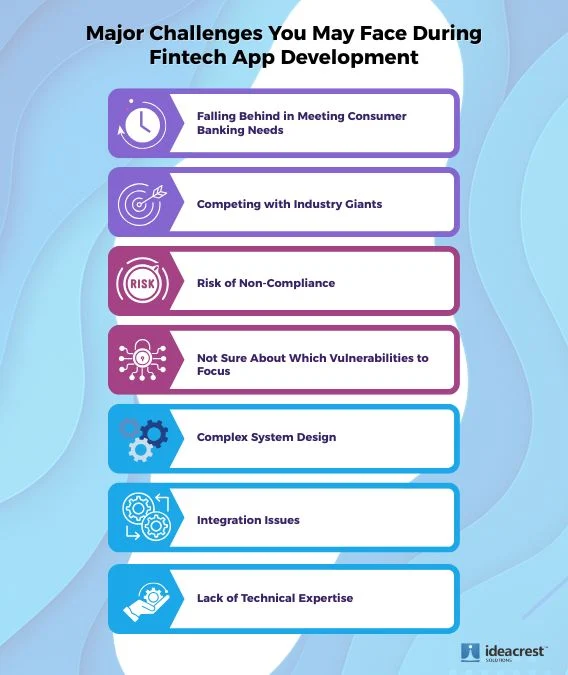
1. Falling Behind in Meeting Consumer Banking Needs
Consumers’ banking habits are constantly evolving.
Unfortunately, many fintech companies and banks struggle to keep pace, which often leads to customer loss.
That’s why investing in a fintech app that truly reflects market research and user needs is essential.
So, start by researching the market:
- 1. What kind of apps are working well?
- 2. How are users responding to them?
- 3. What features and functionalities are in demand?
You can find these answers by doing social listening: monitoring platforms like LinkedIn, Reddit, and user review sites.
Once you’ve gathered insights, assess whether these expectations align with your business goals and offerings.
If they do, it might be time to take action.
2. Competing with Industry Giants
When building your fintech app, it’s only natural to look up to leading fintech and banking organizations as examples.
However, in doing so, it’s easy to lose sight of your unique value proposition and fall into the trap of trying to improve their apps rather than focusing on building your own.
And it’s important to remember that their apps look refined because they have years, sometimes decades, of experience and user feedback behind them.
So comparing your early-stage product to theirs is not only unhelpful but can actually hold you back.
3. Risk of non-compliance
Regulatory compliance is one of the biggest challenges fintech startups face.
To put it in perspective, PR Newswire reported in April 2025 that nearly 73% of fintech startups fail due to regulatory hurdles.
Let’s explore what contributes to it.
Staying compliant is difficult because regulations covering every aspect of banking, from customer onboarding to account closure, are constantly evolving. This makes it easy to overlook critical requirements.
To address this, you should establish a solid compliance framework that:
- 1. Covers the fundamental regulations
- 2. Is flexible enough to adapt to regulatory changes
- 3. Leverages technology to monitor and implement updates on schedule
Being proactive about compliance not only reduces risk but also builds trust with your users and stakeholders.
4. Not sure about which vulnerabilities to focus
Cyber threats in the banking sector come in many forms, which makes it easy to feel overwhelmed or miss key vulnerabilities.
When that happens, your app and internal systems may be left exposed to serious risks.
To strengthen your defenses, it's important to understand two key points:
- 1. Cyber threats target not only software but also hardware, including outdated or poorly maintained systems.
- 2. Not all threats carry the same level of urgency. Some require immediate attention, such as DDoS attacks, SQL injection, session hijacking and prompt injection. Others may pose less risk and can be deprioritized.
To effectively manage cyber threats, focus on the most critical and high-impact issues first.
Start by regularly checking resources like the OWASP Top 10, the CVE (Common Vulnerabilities and Exposures) database, and staying up to date on emerging threats, especially those involving LLMs and AI systems.
Once you have identified the key risks, make sure your fintech app is resilient:
- 1. Rigorously test your code
- 2. Debug frequently
- 3. Prepare for potential downtime
- 4. And continuously update your threat response plan
Staying ahead of cyber threats is not just a best practice, it is essential for long-term success.
5. Complex system design
System design is a critical step when building a fintech app. Skipping or rushing through it can result in a slow, inefficient, and error-prone product.
To avoid this, you need a clear understanding of how your app should function. Consider how users will interact with it, how it will communicate with the backend, how to structure workflows efficiently, and how integrations will be handled.
In short, take the time early on to thoughtfully plan and invest in your system design. It sets the foundation for everything that follows.
6. Integration issues
Imagine your fintech app is up and running, and eight months later, a new requirement comes in, you need to integrate it with one of your legacy systems.
The problem is, since the app was built recently, integration with older systems wasn’t part of the original plan. As a result, you can’t meet the requirement, and this impacts your customers' experience.
To avoid this situation, always design your app with backward compatibility in mind. Legacy systems are not always easy, or even possible, to replace, so building with integration in mind from the start can save time, money, and frustration down the road.
7. Lack of technical expertise
Building a fintech app can demand significant time and resources, especially if you lack technical expertise.
If you're considering using no-code or low-code platforms, or AI code generators, without the guidance of an expert, there's a high chance you'll end up with an app that’s flawed or not ready for public use.
To avoid this, hire a skilled software developer or tech consultant. They can analyze your business requirements, assess your infrastructure, choose the right tech stack, and help you build a reliable, secure app that’s ready to go live.
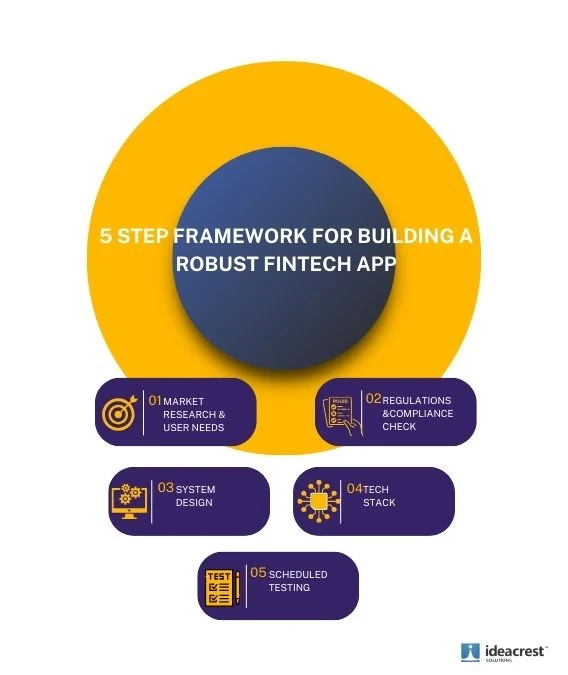
To sum it up, you can follow this five-step framework to tackle these challenges while building your app:
Conclusion
Considering all these points, it’s natural to feel anxious about launching your app.
Remember, building an app doesn’t have to take a year or more. What matters most is having a clear plan. If you decide to use AI tools, be extremely cautious about potential security loopholes and code performance issues.
It’s always better to get help from an experienced software developer.
While the initial investment in their services might seem high, in the long run, it will likely cost you less than relying solely on AI tools or no-code/low-code platforms.
So don’t hesitate to seek expert help for tech consulting and custom software development.
You’ll save time and achieve your goal faster.